What If Curiosity Mattered More Than Marks?
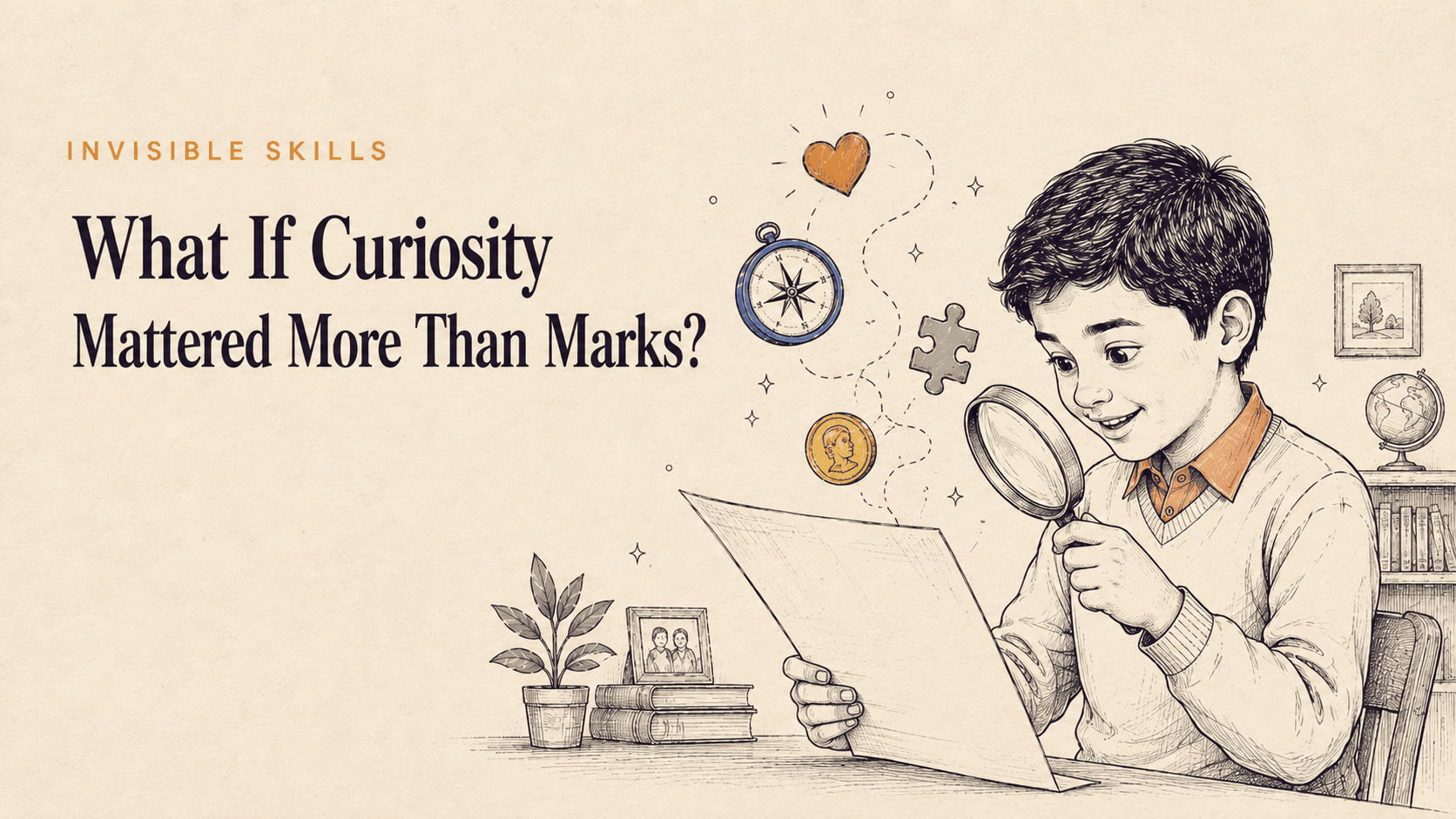
Marks tell us something, but they do not tell us everything. They can indicate how well a student performed on a defined task at a particular moment. They do not fully reveal courage, curiosity, accountability, communication or the quality of a child's decisions.
These “invisible” skills are not decorative additions to academic learning. OECD research links social and emotional capacities including persistence, responsibility, emotional control, curiosity, empathy and trust with academic success, life satisfaction and stronger future aspirations. The World Economic Forum similarly identifies creative thinking, resilience, flexibility and lifelong learning among skills rising in importance.
The challenge is that schools cannot develop these capacities through lectures alone. Courage grows when a student can attempt an unfamiliar task without ridicule. Accountability grows when a child repairs a mistake rather than escaping its consequence. Communication grows through discussion, performance, teamwork and disagreement. Decision-making grows when students face real choices and reflect on results.
Financial literacy belongs here too. In the OECD's PISA 2022 assessment, 18 percent of participating students, on average, did not reach basic proficiency in applying financial knowledge to real-life situations. So perhaps the provocative question is not whether schools should teach investing before algebra. It is why we so rarely connect algebra to saving, risk, interest and everyday decisions.
A future-ready report card should therefore ask more than, “What does this child know?” It should also ask: Can the child question respectfully? Can she explain an idea? Can he collaborate when opinions differ? Can the student use freedom responsibly?
When schools measure only what is easy to count, they risk neglecting what is hardest to replace. Education becomes more complete when character, judgment and agency become visible parts of learning.
Written by Raj Mirani, founder of Divine Group of Schools.